As sustainability becomes a defining value in modern luxury, more consumers are asking:
What is the environmental impact of lab-grown diamonds compared to mined diamonds?
Are lab-grown diamonds truly more sustainable?
How damaging is diamond mining?
What should conscious buyers know before making a decision?
Let’s explore the facts.
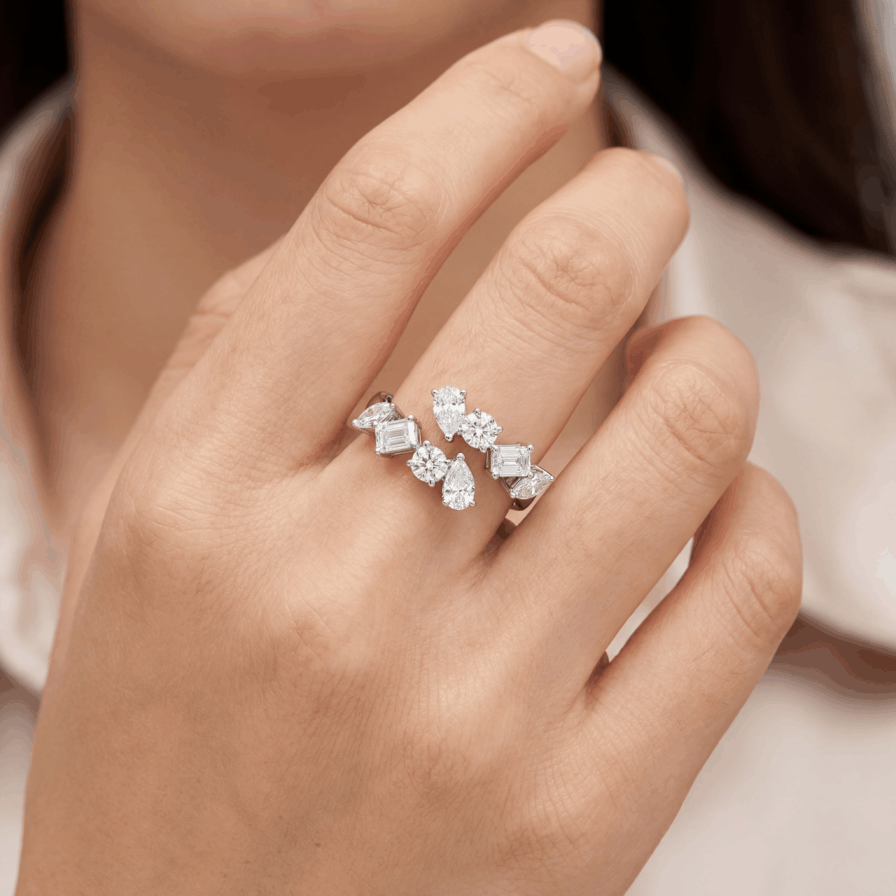
Natural diamonds are formed over billions of years deep within the Earth. Extracting them requires large-scale mining operations.
Diamond mining often involves:
Open-pit mines can stretch hundreds of acres and permanently alter landscapes.
Mining operations require significant amounts of water for:
In some regions, this may affect local water supplies and ecosystems.
Heavy machinery, excavation, transportation, and processing all require substantial energy often from fossil fuels.
This contributes to:
Mining generates large quantities of waste rock and tailings (leftover materials after extraction).
These byproducts can:
Lab-grown diamonds are created in controlled laboratory environments using advanced technology such as CVD or HPHT.
They eliminate the need for mining.
Lab-grown diamonds:
This significantly reduces direct landscape destruction.
Because production is controlled, lab-grown diamonds generate minimal physical waste compared to traditional mining.
Energy Use Considerations
It is important to note:
Lab-grown diamonds do require electricity to power reactors.
The environmental impact depends largely on:
Many modern labs are transitioning toward renewable energy to further reduce carbon footprints.
While exact numbers vary depending on region and production method:
In general, lab-grown diamonds are considered to have:
Mining operations may alter:
Lab-grown production facilities operate in industrial environments, avoiding direct interference with natural habitats.
Lab-grown diamonds offer a key sustainability advantage:
Full production traceability.
Because they are created in laboratories:
This transparency is increasingly important to modern consumers.
It is also important to acknowledge:
Some diamond mining companies have adopted stricter environmental standards, rehabilitation programs, and sustainability initiatives.
The industry continues evolving.
However, environmental restoration does not fully eliminate the original ecological disruption.
For buyers prioritizing:
Lab-grown diamonds often align more closely with those values.
For buyers who prioritize:
Mined diamonds may remain appealing.
The difference between lab-grown and mined diamonds is not about beauty both are real diamonds.
The difference lies in how they are produced and their environmental footprint.
Modern luxury is evolving.
Today’s buyers are not just asking,
“How brilliant is it?”
They are asking,
“How responsibly was it created?”
At TeeTee&Co. , we believe luxury should reflect intelligence, transparency, and conscious choice.
Our lab-grown diamonds are independently certified and crafted with modern sustainability values in mind.
Because brilliance should shine responsibly.